Visibility and Its Limits: Class, Representation, and Social Order in Bridgerton
Essay
Series Review· Blackness ·Respresentation · Colonialism
11 May 2026
Note: This essay was written prior to the release of Season 4 of Bridgerton and does not take its developments into account.
Bridgerton presents a courtly world in which diversity is stylized as self-evident. Between silk tulle and the social season, we encounter Black aristocrats, biracial dukes, and self-assured seamstresses, seemingly without fractures in the system. But what does it mean when social inequalities are not denied, but aesthetically obscured? This essay examines the question of class in Bridgerton and asks how much space truly remains between representation and reality.

A World as If Painted?
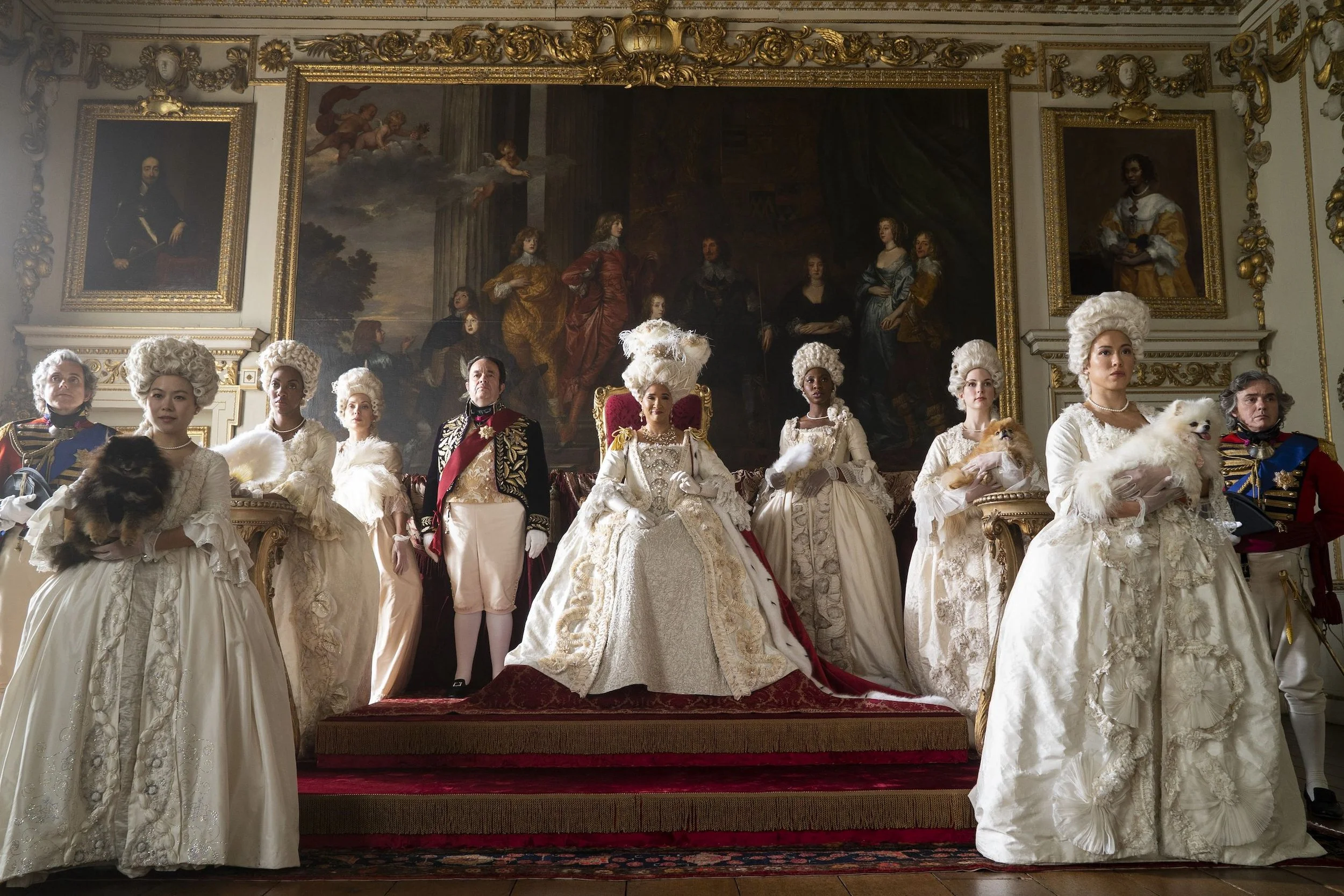
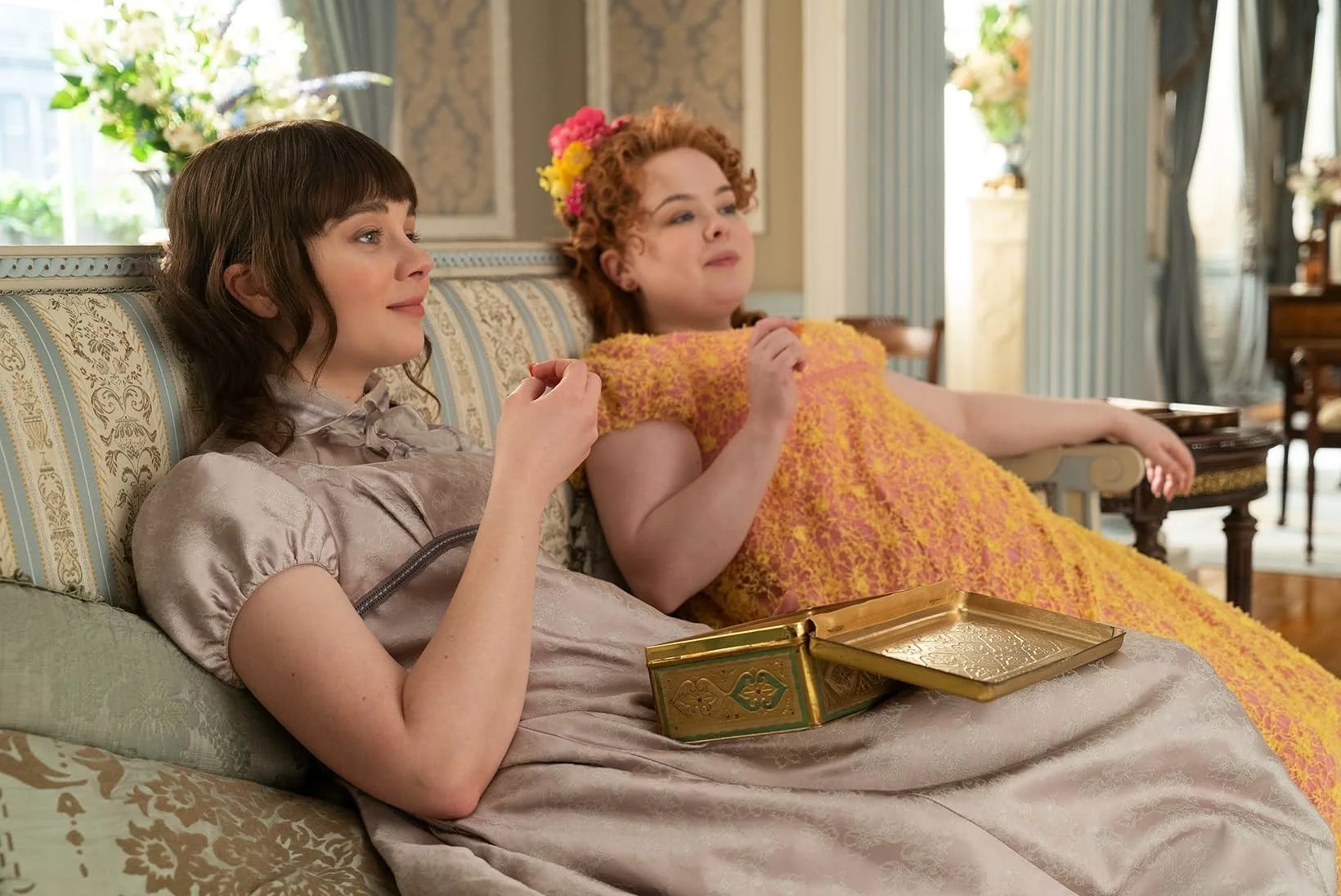
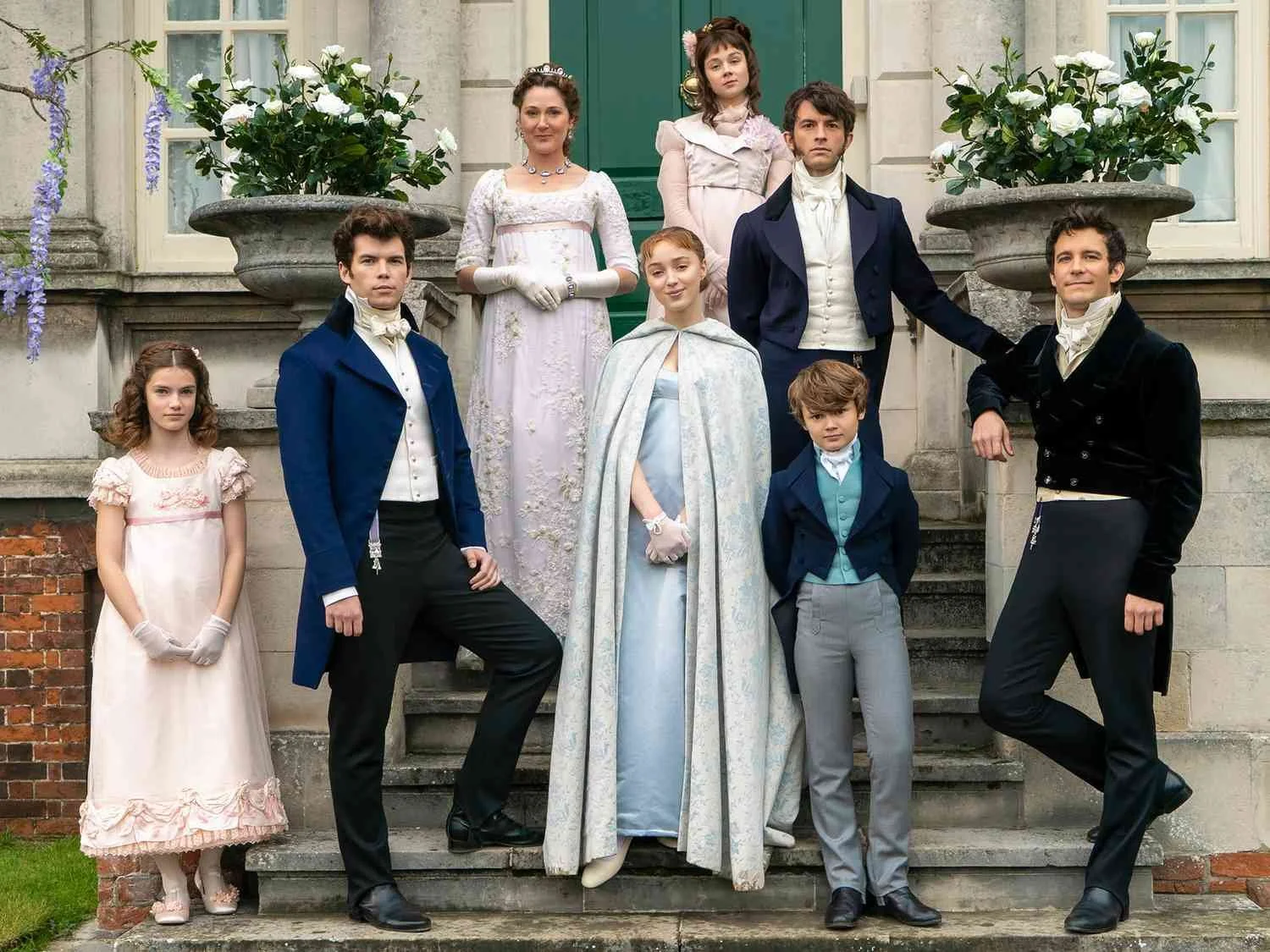
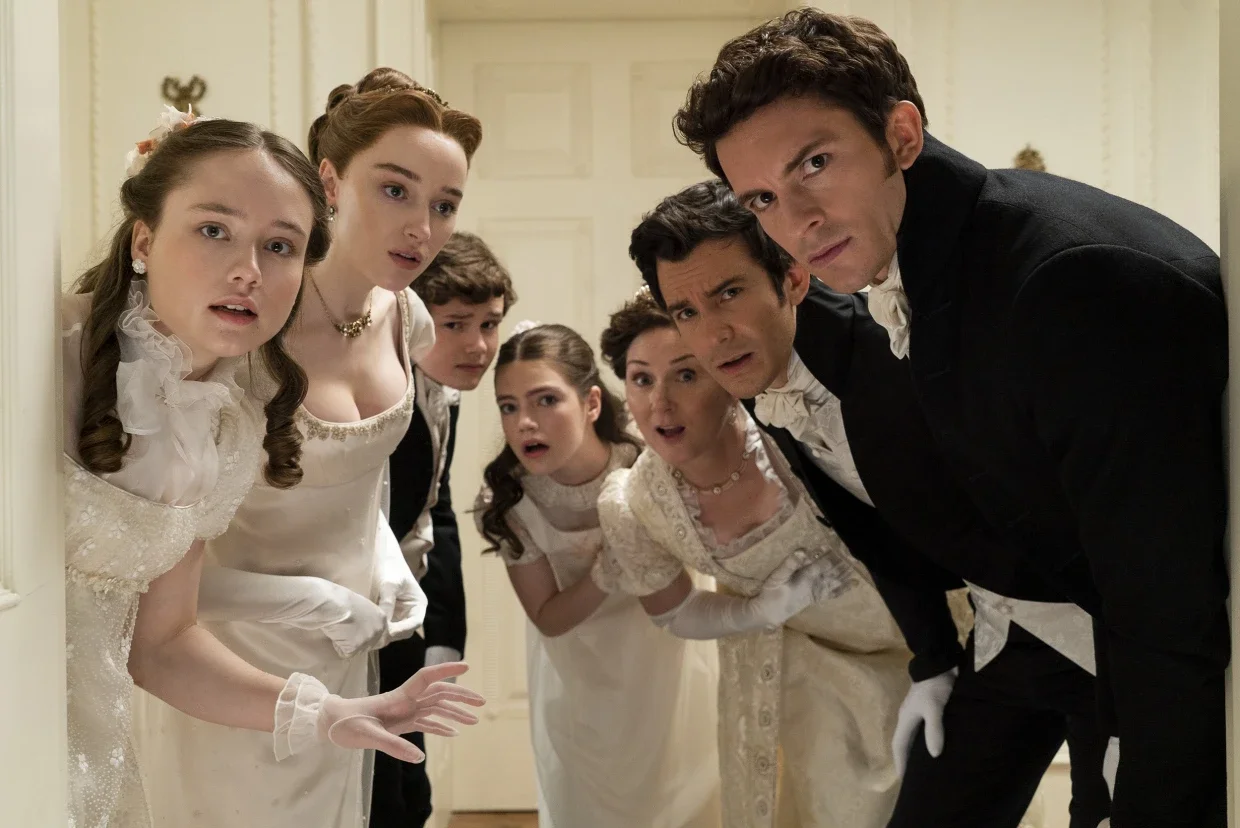
Bridgerton is set in Regency London, more precisely in a fictionalized version of the English upper class in the early nineteenth century. The series revolves around marriage strategies, the preservation of wealth, and the management of social reputation within a strictly hierarchical order. Yet from the outset, it becomes clear that this world is not historically reconstructed but deliberately reimagined. Its visual language, opulent fabrics, luminous color palettes, symmetrical compositions, and meticulously ordered interiors, produces a stylized environment in which balls, salons, and promenades function as controlled stages of social visibility.
Within this aesthetic regime, difference appears curiously stabilized. Black aristocrats, biracial figures, and self-assured women are not marked as exceptional but integrated into the narrative as unremarkable. Racism is largely absent from the plot, and social belonging is framed primarily through title, wealth, and marital eligibility. This is not a naïve simplification but a deliberate representational strategy. Bridgerton constructs a world in which difference is visible without being rendered conflictual. Equality is not presented as a political horizon but as an already accomplished condition.
As Stuart Hall has argued, representation is not the reflection of reality but an active process through which meaning is produced (Hall 1997, 15). What matters, then, is not only what is shown, but how visibility itself is organized. In Bridgerton, visibility is granted to those who have already secured their place within the system: dukes, lords, wealthy families, and strategically positioned social climbers. The conditions that enable this arrival remain largely unarticulated. Social mobility is narratively present, but structurally opaque. Advancement appears as the outcome of individual trajectories rather than as a process shaped by constraint.
For viewers unfamiliar with the series, this logic can be summarized succinctly: Bridgerton does not present inequality as an explicit problem but as an aesthetically pacified order. Conflict emerges not from material deprivation, but from questions of reputation, propriety, and romantic alignment. Poverty, precarious labor, and institutional exclusion are displaced to the margins or assigned to secondary figures. This narrative strategy privileges identification over confrontation. It relocates social tension from the level of structural relations to that of individual decision-making.
The result is a world that appears open while remaining tightly regulated. Visibility operates as a form of inclusion, but one that is conditional and selective. Those who belong are seen; those who do not remain peripheral. It is precisely for this reason that Bridgerton demands to be read not simply as escapism, but as a carefully staged social order, one that presents itself as equitable while leaving the mechanisms of that appearance largely unexamined. The central question, then, is not whether this world is realistic, but how it constructs equality and what it systematically leaves out.
Will Mondrich: Mobility with Limits
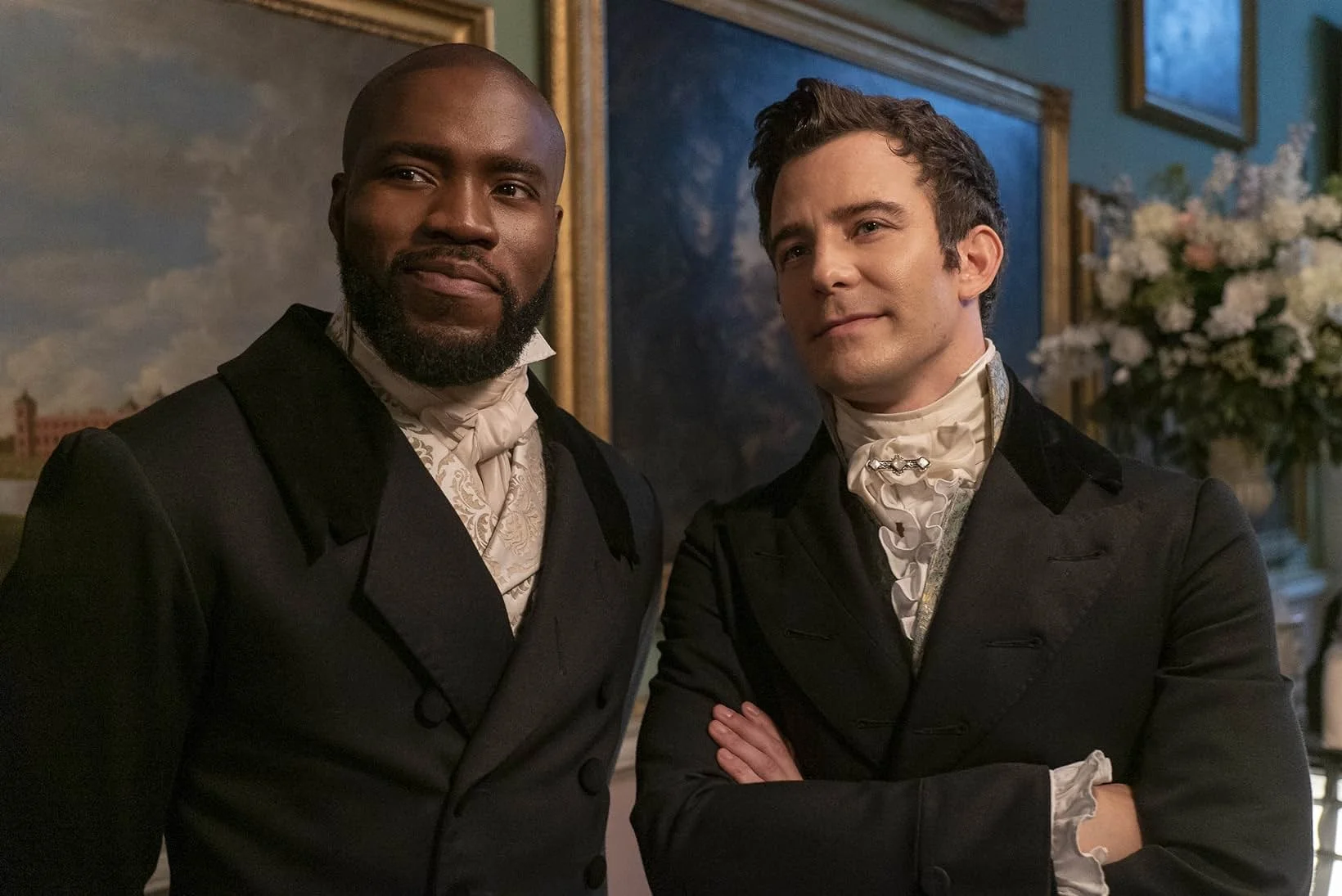
Will Mondrich is one of the few central figures in Bridgerton whose life is not initially anchored in the aristocratic order. In the first two seasons, he appears as a successful boxer and bar owner, embedded in a social environment defined by physical labor, economic pragmatism, and communal proximity. His position stands in marked contrast to the world of the nobility, where status is regulated through lineage, etiquette, and inherited capital.
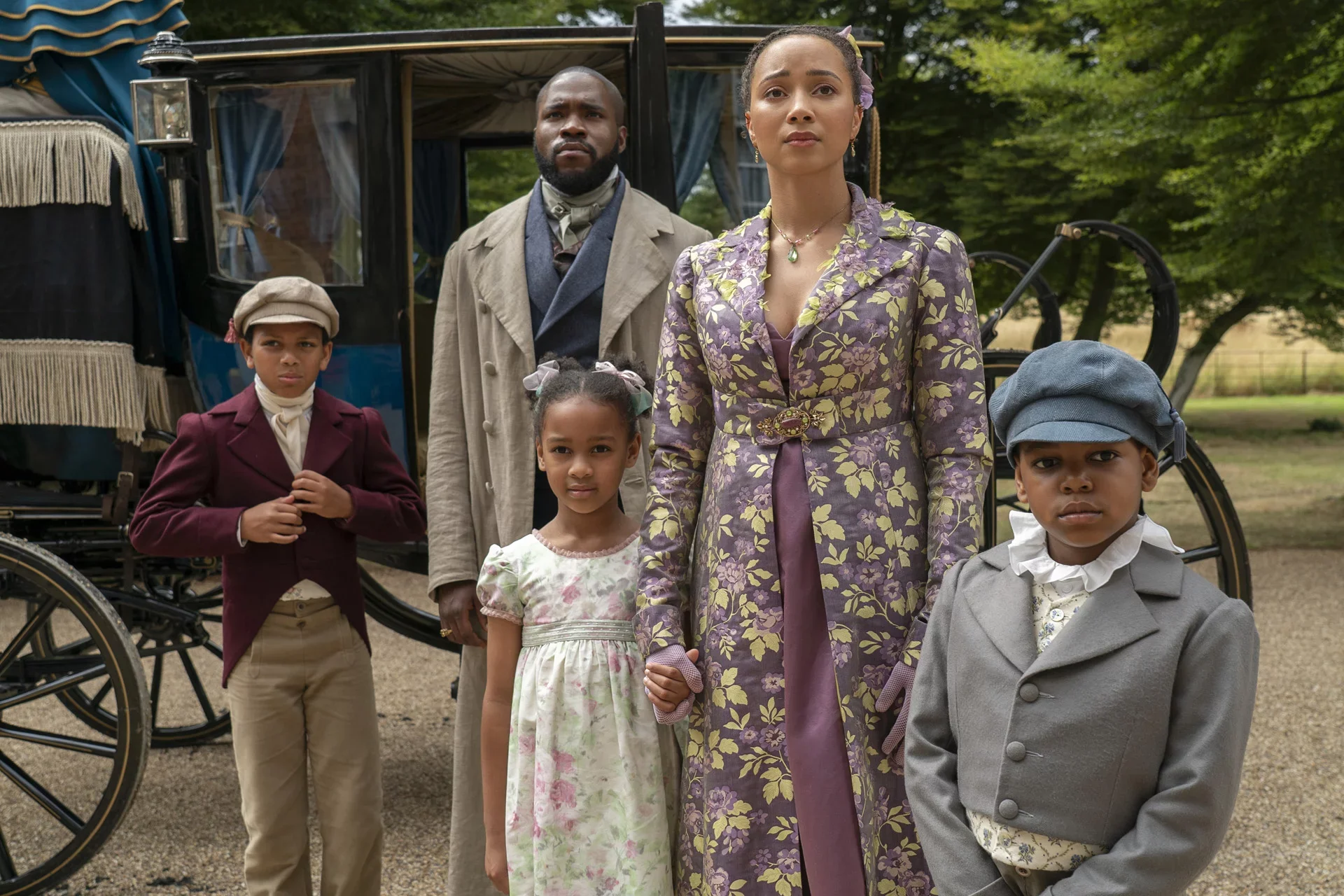
In the third season, this position is disrupted by an unexpected inheritance. A distant relative of Mondrich’s son dies without heirs, leaving the child both title and estate. As legal guardian, Mondrich assumes the social position attached to this inheritance. This narrative shift introduces a figure of upward mobility, yet one whose integration into the aristocratic order remains structurally unstable from the outset.
Crucially, Bridgerton does not equate ascent with full participation. Mondrich is formally incorporated into the upper class, but remains socially peripheral. The tension between his former life and the expectations of his new status becomes the central dynamic of his storyline. While his wife rapidly adapts and actively pursues their repositioning within elite society, Mondrich resists a complete break with his past. His bar functions as a material and symbolic anchor, representing autonomy, continuity, and forms of social belonging that exist outside aristocratic norms.
This conflict is made explicit in scenes where his continued attachment to the bar is framed as incompatible with his new role. Mondrich’s insistence on maintaining both positions exposes the limits of mobility within a system that demands not only economic but also cultural conformity. Belonging, in this context, is regulated through habitus, language, and performance as much as through title or wealth.
Kimberlé Crenshaw’s concept of intersectionality provides a useful framework for understanding this configuration. Crenshaw argues that forms of inequality do not operate independently, but intersect in ways that produce distinct modes of marginalization (Crenshaw 1989, 149). Mondrich’s situation cannot be reduced to a single axis of difference. As a Black man of working-class origin entering an aristocratic field, he occupies a position shaped by the convergence of race, class, and gendered expectations. His presence produces visibility, but not stability.
This instability is reflected in the terms of his acceptance. He is received with politeness, yet this politeness is contingent and fragile. His physicality, once associated with strength, is reinterpreted within the elite context as a potential disruption. His voice is acknowledged, but only insofar as it aligns with established norms. Participation is conditional, and deviation risks exclusion.
For viewers unfamiliar with the series, Mondrich’s trajectory illustrates how popular media can stage social mobility without interrogating its structural limits. His ascent is narratively framed as the result of contingency rather than systemic change. Mobility remains individualized, detached from collective transformation, and dependent on exceptional circumstances. The social order itself remains intact.
Importantly, Mondrich’s storyline resists resolution. He neither fully relinquishes his former life nor fully secures his position within the new one. Instead, he occupies an intermediate space that is neither transitional nor stable. It is precisely this unresolved position that renders the figure analytically productive. Mondrich embodies a form of inclusion that is not accompanied by power, but by a carefully managed visibility, one that allows presence without fundamentally altering the terms of belonging.
Genevieve Delacroix: Craft, Habitus, and Conditional Visibility
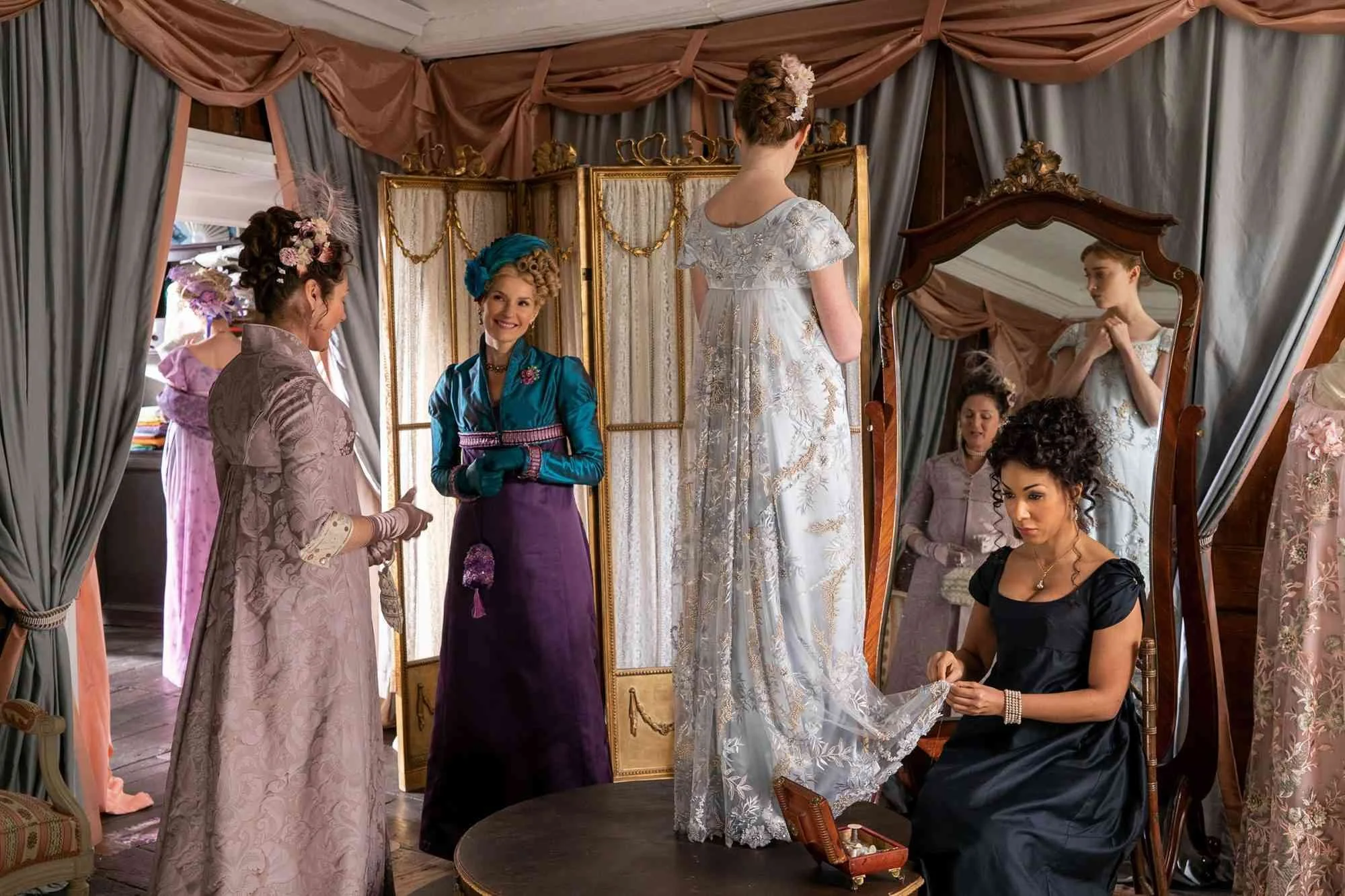
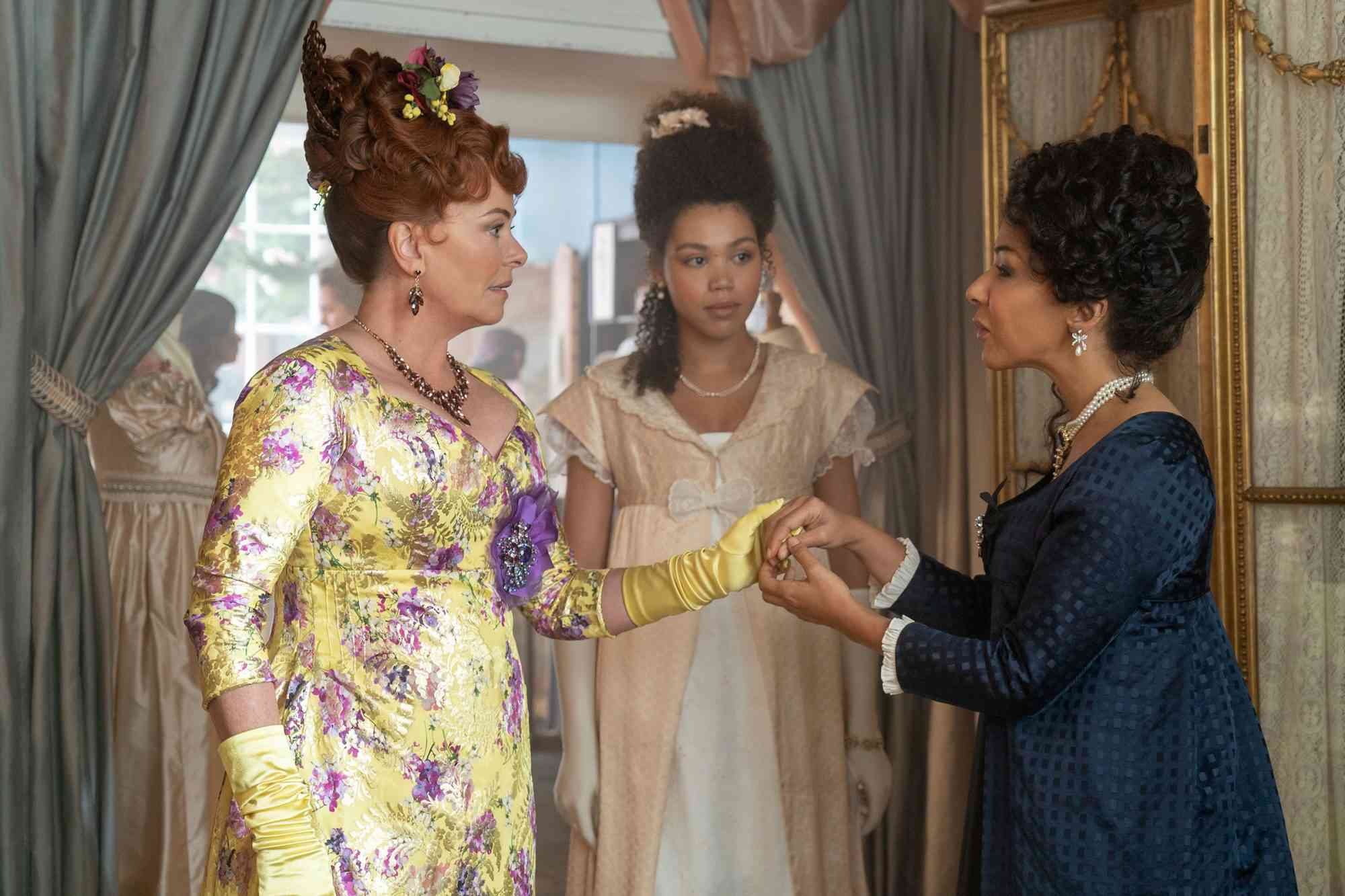
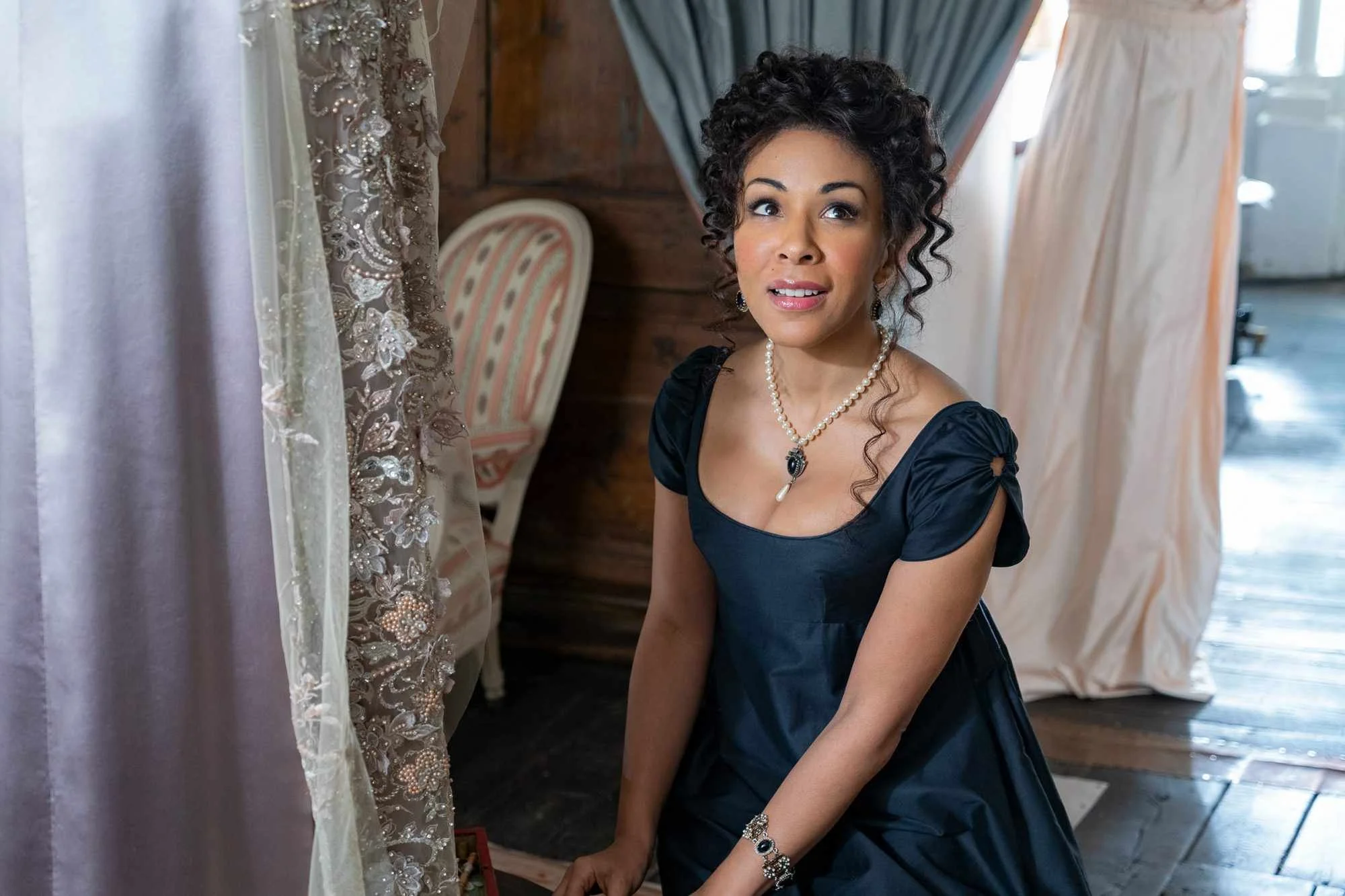
Genevieve Delacroix occupies a structurally ambivalent position within Bridgerton. As a modiste, she designs garments, shapes silhouettes, and operates in close proximity to the aristocracy, yet remains excluded from it. Her role is neither purely decorative nor fully autonomous. She functions simultaneously as observer and service provider, both embedded in the social scene and structurally positioned at its margins. This dual positioning renders her an exemplary figure of what might be understood as an embodied social boundary.
Within the series, Delacroix’s work is central to the production of aristocratic visibility. Her workshop operates as a site of transformation, where social identities are materially staged. Young women are rendered debutantes, and bodies are calibrated to the aesthetic and affective demands of elite society. Clothing functions here not merely as adornment, but as a medium of distinction. It enables access, signals belonging, and stabilizes hierarchies. Delacroix produces the forms through which the social order becomes legible, while remaining excluded from the recognition that these forms generate.
Pierre Bourdieu’s analysis of symbolic capital provides a useful framework for understanding this dynamic. In Distinction, Bourdieu argues that taste, style, and habitus operate as markers of social position and as mechanisms of differentiation (Bourdieu 1987, 299). Delacroix possesses a partial command of this symbolic capital. She understands the codes, anticipates expectations, and materially produces the signs of belonging. Yet she lacks the structural legitimacy required to inhabit the position she helps to construct. Her proximity to the aristocracy is functional rather than socially validated.
Notably, Delacroix is one of the few female characters in the series who operates with a degree of economic independence. Her workshop constitutes her own domain: she generates income, makes decisions, and controls a space that remains inaccessible to many others. However, this autonomy does not translate into social mobility. On the contrary, her position illustrates how economic agency can coexist with and even reinforce social limitation. The more her labor is integrated into the production of elite visibility, the less visible her own position becomes.
This paradox is further reinforced by her access to information. Delacroix is privy to conversations, relationships, and tensions that remain concealed from others. She occupies a position of proximity that affords insight, yet this knowledge does not convert into durable power. It grants her a form of situational authority, but one that remains constrained by expectations of discretion. She is permitted to observe, but not to intervene. Her agency is thus bounded by the very system she sustains.
Delacroix’s position also foregrounds the performative dimension of class. In Bridgerton, belonging is not determined solely by inheritance or wealth, but by the capacity to embody specific forms of conduct, appearance, and expression. Delacroix is intimately familiar with these forms; indeed, she produces them. Yet she cannot fully appropriate them. As Bourdieu notes, the “naturalness” of taste is itself the product of social conditioning (ibid., 75). Delacroix speaks the language of distinction, but with a marked difference, one that signals her position rather than dissolves it.
What renders her analytically significant is her strategic negotiation of this boundary. Delacroix does not seek assimilation into the aristocratic order. Instead, she operates within its limits, leveraging her position without attempting to transcend it. Her figure thus exemplifies a broader structural condition: that of actors whose labor is essential to the maintenance of social hierarchies, yet who remain excluded from their benefits.
For viewers unfamiliar with the series, Delacroix can be read as a figure through which the relationship between production and recognition, proximity and exclusion, becomes visible. Her trajectory demonstrates that economic independence does not necessarily entail social mobility, and that the capacity to shape visibility does not guarantee being seen. She is neither protagonist nor peripheral. Rather, she functions as a critical site through which Bridgertonrenders the limits of inclusion legible.
Lady Whistledown: Voice without Face, Power without Attribution
Lady Whistledown does not operate as a character in the conventional sense. She functions as a voice, disembodied, circulating, and structurally unlocatable. Throughout the first seasons of Bridgerton, her identity remains concealed, while her presence manifests exclusively through an anonymously published gossip sheet that comments on and, at times, disrupts the social life of London’s upper class. This asymmetry between invisibility and omnipresence constitutes the basis of her narrative and social force.
Whistledown occupies a position that is simultaneously internal and external to the system she describes. She observes, reports, and frames events, but does so from a position that cannot be easily contained within existing social categories. Her writing does not merely reflect social reality; it actively organizes it. Scandals, relationships, and reputations acquire meaning through her articulation. Those named in her column gain or lose symbolic capital, not independently of her discourse, but through it. In this sense, Whistledown operates as an informal yet highly effective mechanism of social evaluation.
The reach of her publication is central to this function. Her texts circulate across class boundaries, read by aristocrats, servants, merchants, and even the queen. The printed pamphlet enables a form of distribution that cuts across hierarchical divisions without dissolving them. What emerges is a moment of mediated permeability: different social strata are linked through a shared engagement with the same narrative, even as their structural positions remain intact. This circulation does not produce equality, but it reorganizes attention.
Stuart Hall’s understanding of representation as a process of meaning production is particularly instructive here (Hall 1997, 15). Whistledown does not simply describe the world of Bridgerton; she contributes to its constitution. Her writing renders certain events visible while relegating others to irrelevance. What is named enters the social field; what is omitted risks disappearance. Language, in this context, operates as a technique of power. Anonymity, in turn, functions as the condition that enables this power to be exercised without immediate accountability.
Yet this power remains structurally ambivalent. Whistledown’s interventions generate disruption, but not transformation. Her revelations unsettle reputations and redistribute attention, but they do not challenge the underlying logic of the system. Instead, they reinforce it by continuously narrating its terms, honor, scandal, propriety, and desirability. Her writing produces affect and movement, but it does not destabilize the framework within which these effects are legible. She operates within the system’s grammar, not against it.
This ambivalence resonates with bell hooks’ analysis of popular culture as a site where power relations become visible without necessarily being altered (hooks 1992, 21). Whistledown’s column occupies precisely this space. It generates pleasure, curiosity, and critique, while remaining embedded in the very structures it appears to expose. Its effects are immediate but not structural.
From this perspective, Whistledown can be understood as a form of counter-public that remains entangled with dominant structures. She is neither part of the official order nor fully outside it. Her voice is female, anonymous, and textual, qualities that position her in tension with a social world organized around visibility, lineage, and embodied authority. Her influence derives precisely from this disjunction. She intervenes without being locatable as a subject within the hierarchy she addresses.
Sara Ahmed’s concept of affect further clarifies the mechanism through which this influence operates. Ahmed emphasizes that affects circulate through social spaces, shaping orientations, attachments, and forms of belonging (Ahmed 2012, 3). Whistledown’s writing mobilizes such affective economies. It produces anticipation, anxiety, fascination, and desire, binding its readership to the narrative while sustaining a continuous state of expectation. Her power lies not only in what she reveals, but in how she structures attention and emotional investment.
At the same time, her anonymity must be understood as a form of precarious agency. Whistledown’s ability to act depends on her invisibility. Once identified, her position becomes vulnerable to the very mechanisms of control she has so far evaded. Her authority is therefore contingent, sustained by concealment rather than institutional recognition.
Lady Whistledown is thus less a character than a function within the series’ social architecture. She exemplifies a mode of agency that operates through language, timing, and narrative framing rather than through formal power. Her presence demonstrates that visibility is not the only axis along which influence is exercised. At the same time, her limits are instructive. She shapes perception, but not structure; she redistributes attention, but not power. In doing so, she makes legible the distinction between being able to speak and being able to transform the conditions under which speech acquires meaning.
Conclusion: Between Surface and Structure
Bridgerton constructs a world defined by glamour, courtly etiquette, and the appearance of effortless diversity. It tells stories of social ascent, alliance, and desire, while simultaneously maintaining structural boundaries that persist beneath its opulent surface. Precisely because these tensions are rarely articulated explicitly, they operate through implication: who belongs, who is seen, and under what conditions visibility becomes possible.
The series’ engagement with social permeability is central to this dynamic. Rather than offering a historically grounded account, Bridgerton presents a stylized field of possibility. Yet these possibilities are unevenly distributed. They remain tied to class, gender, and origin, even when these categories are not directly addressed within the narrative. Figures such as Mondrich, Delacroix, and Lady Whistledown make these tensions legible. Each occupies a position in which visibility does not translate into full participation, revealing the limits of inclusion within the series’ social order.
At the same time, Bridgerton resists reduction to a single interpretive frame. It operates simultaneously as romantic drama, cultural commentary, and pop-cultural spectacle. This plurality is not a weakness but a defining feature. The series does not offer systematic critique, yet it produces a space in which social inequalities become perceptible and open to negotiation. It stages class not through explicit discourse, but through textures, gestures, and narrative positioning.
What emerges is a text that does not resolve the tensions it mobilizes. Bridgerton attempts to reconcile visibility with equality, but ultimately leaves this relation unresolved. Its value lies precisely in this partiality. It neither fully reproduces nor fully challenges the structures it depicts. Instead, it renders them visible in ways that invite further interpretation.
With the release of the fourth season, these questions remain open. Will the series extend its engagement with figures positioned at the margins of its social world? Or will diversity continue to function primarily as an aesthetic condition? The direction remains uncertain. Yet it is precisely this uncertainty that sustains the series’ relevance. Where visibility is staged, the struggle over its terms continues.
Bibliography
Ahmed, Sara. 2012. On Being Included: Racism and Diversity in Institutional Life. Durham: Duke University Press.
Bourdieu, Pierre. 1987. The Fine Differences: Critique of Social Judgement. Frankfurt am Main: Suhrkamp.
Crenshaw, Kimberlé. 1989. "Demarginalizing the Intersection of Race and Sex: A Black Feminist Critique of Antidiscrimination Doctrine, Feminist Theory and Antiracist Politics." University of Chicago Legal Forum 1989(1)
Hall, Stuart. 1997. Representation: Cultural Representations and Signifying Practices. London: Sage Publications / The Open University.
hooks, bell. 1992. Black Looks: Race and Representation. Boston: South End Press.